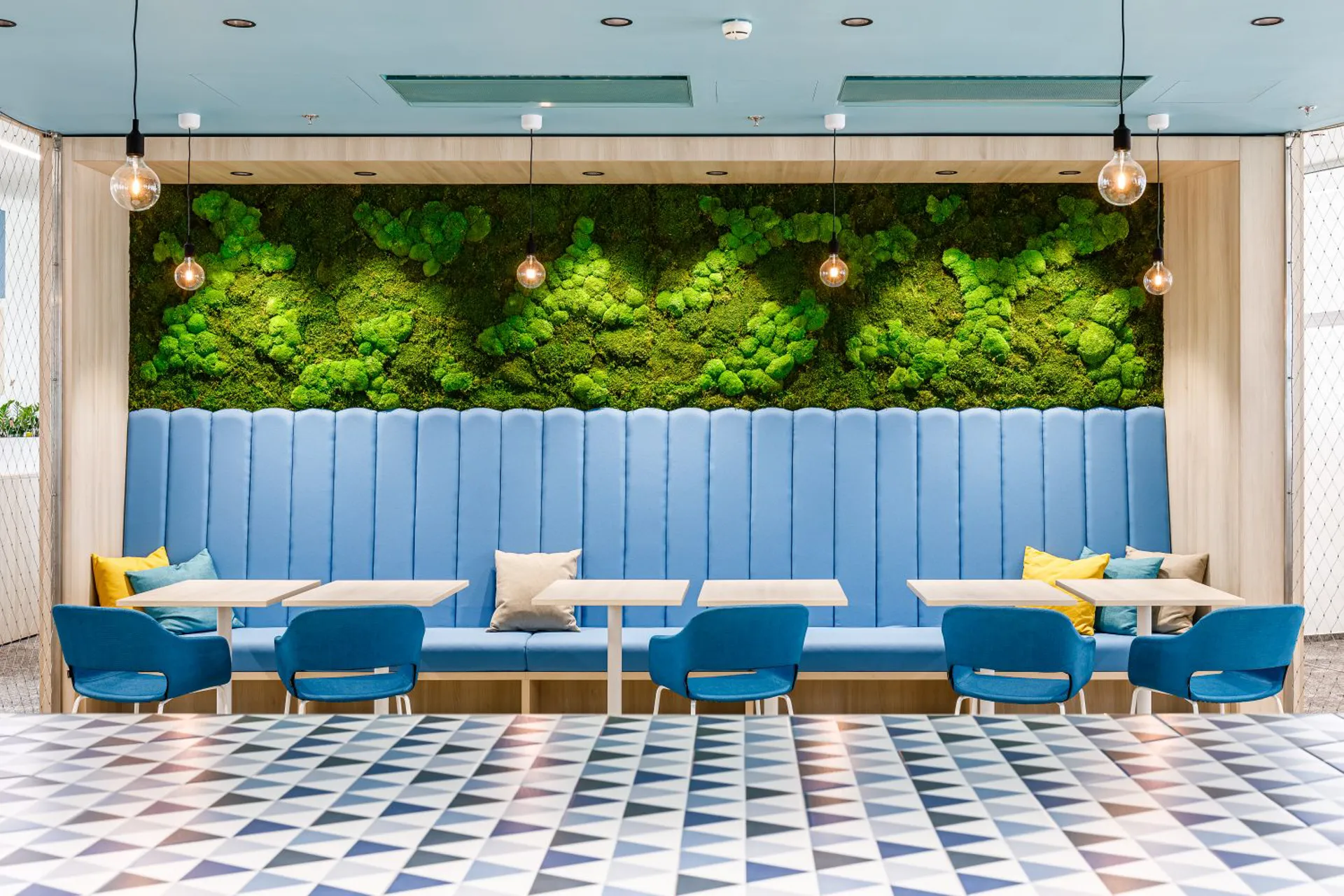
Not long ago, collaboration was the main focus of office design. Companies opened up their spaces, removed partitions, and created environments intended to encourage communication between teams. Today, however,another topic is coming to the forefront: the ability to concentrate. Our own experience during the redesign of our office confirms this trend.
The reason is simple. Hybrid work has led to a significant increase in online meetings, video calls, and virtual collaboration. Activities that once took place in meeting rooms are now often carried out directly at employees' desks. As a result, acoustics have evolved from an overlooked technical detail into one of the most important factors influencing the quality of the workplace environment.
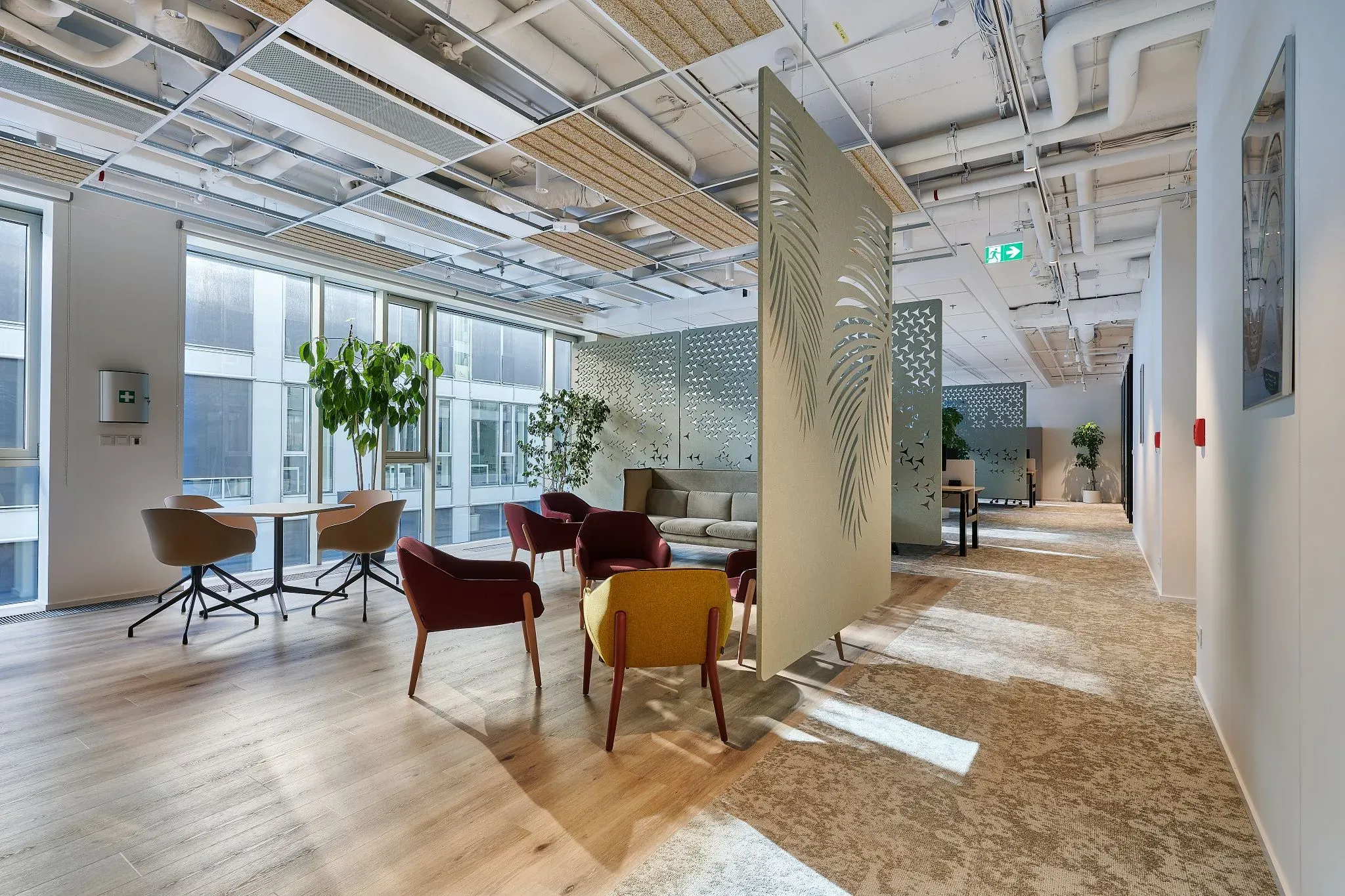
Many offices were designed for a different way of working than the one we use today. Open-plan layouts, large glazed surfaces, and exposed concrete ceilings may create an attractive interior, but they often reduce acoustic comfort. Employees frequently face a paradoxical situation. They work in a modern and visually appealing environment, yet struggle to find a quiet place for focused work or an undisturbed video call.
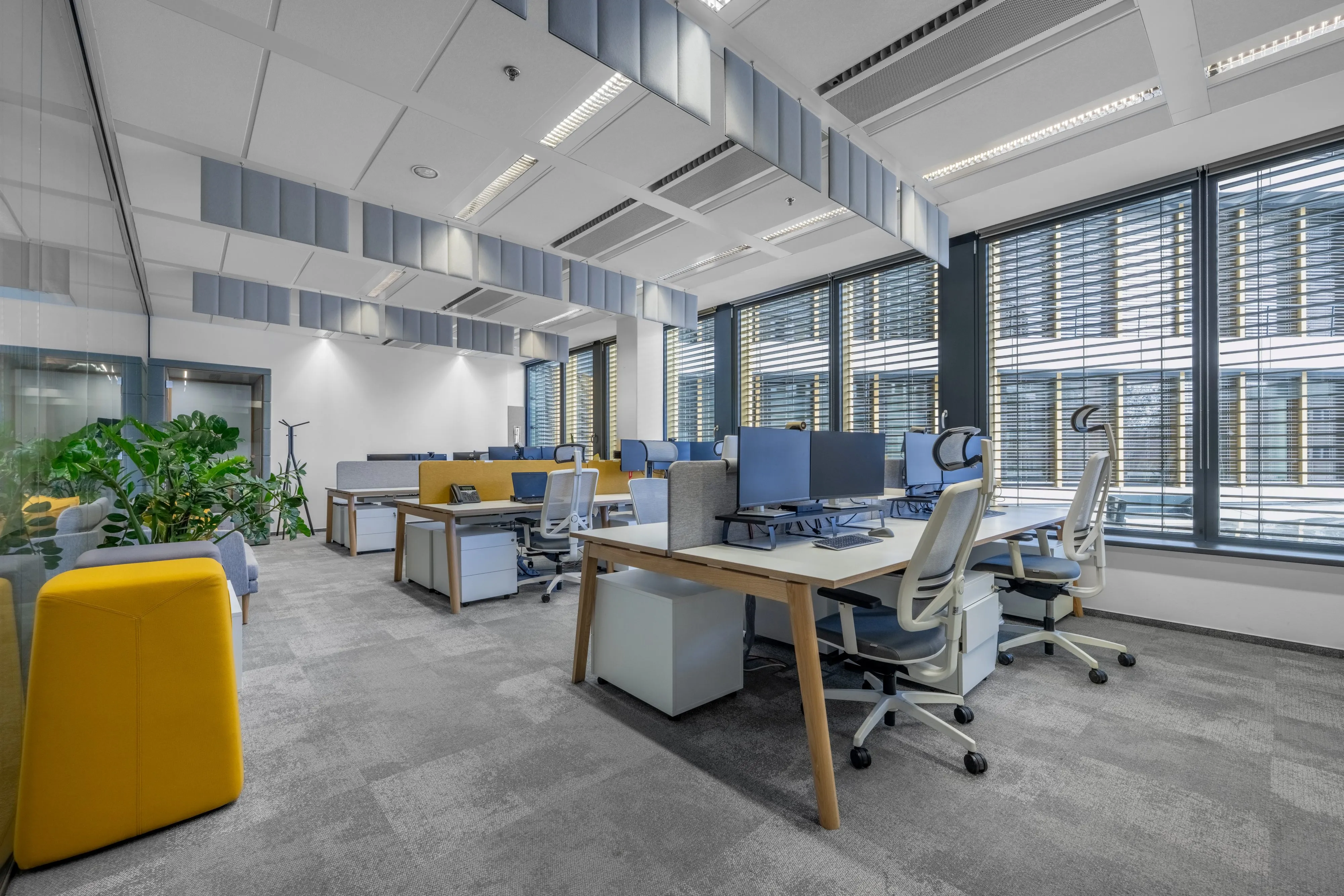
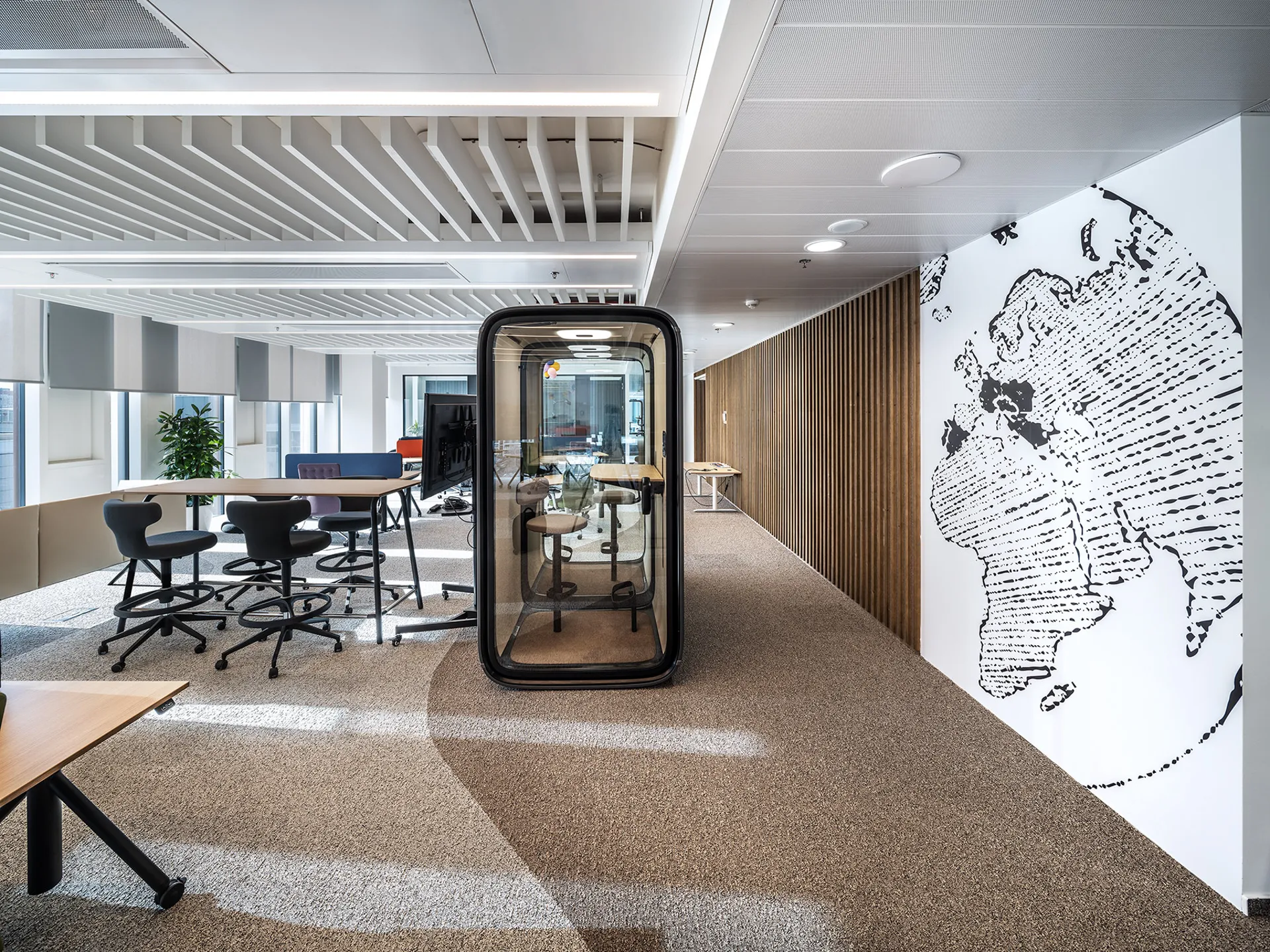
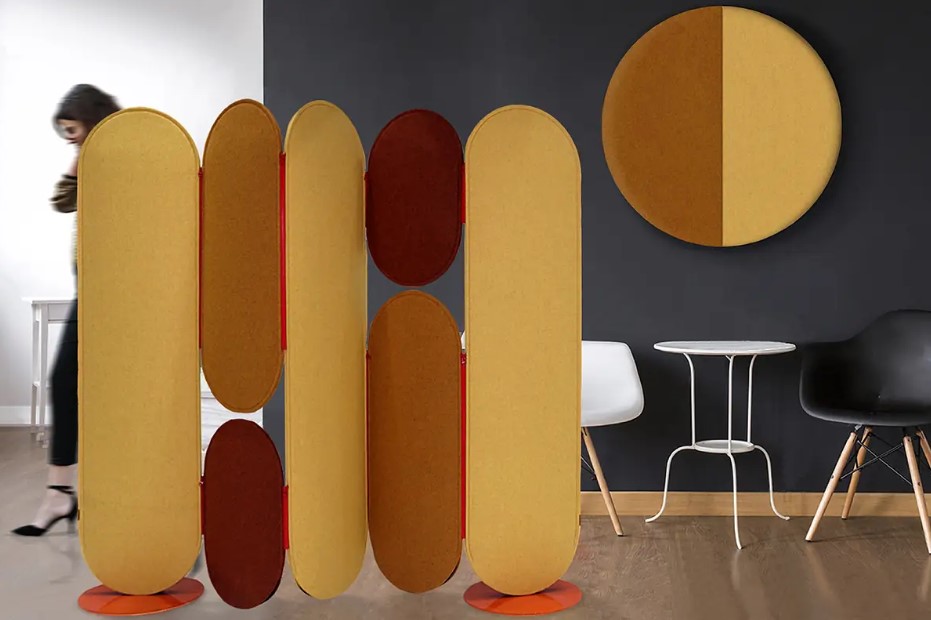
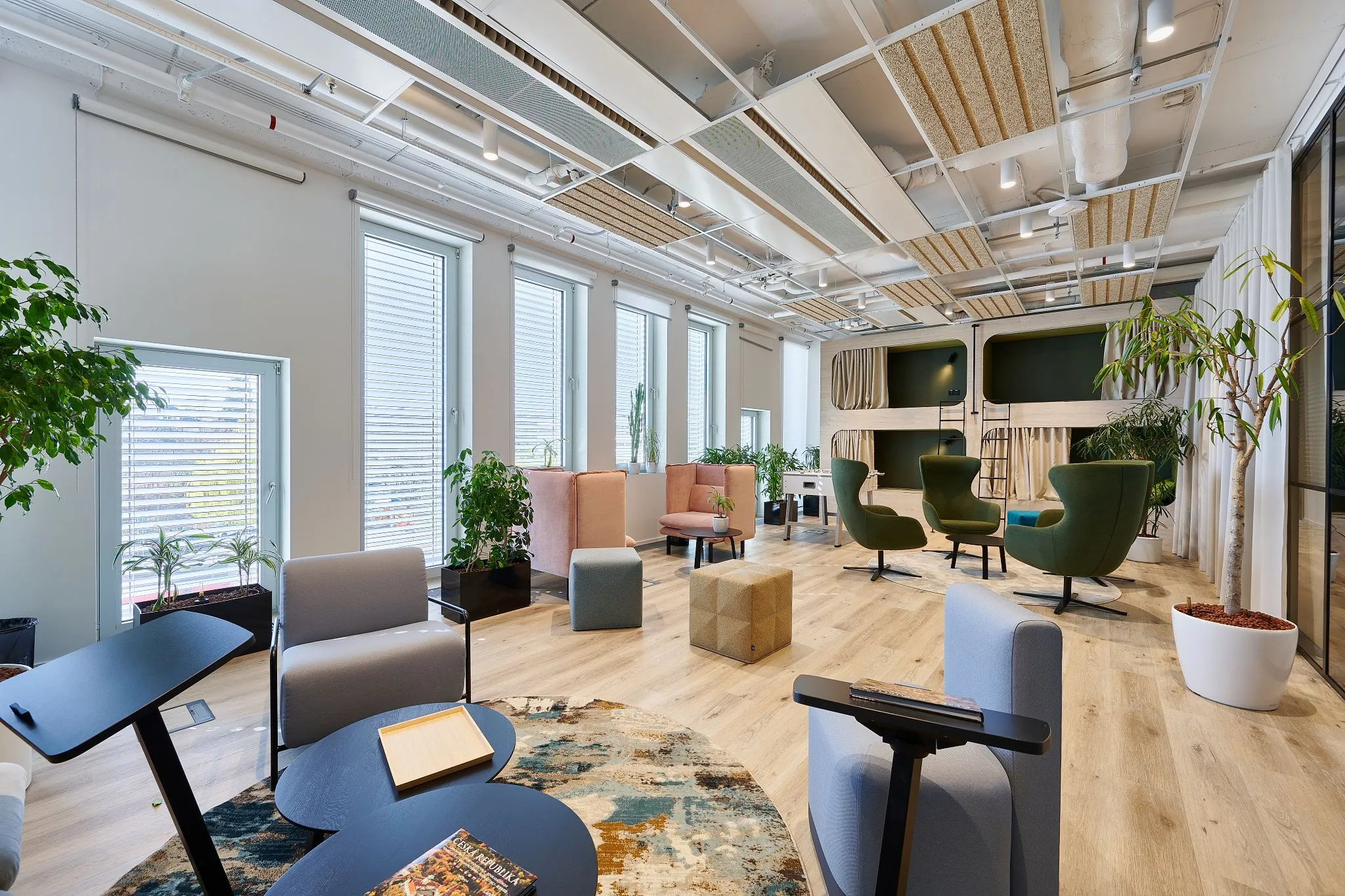
As a result, modern offices are increasingly being designed around acoustic zoning. Alongside collaborative areas, companies are creating quiet zones for individual work, phone booths, and smaller rooms for online meetings. Acoustic panels, sound-absorbing materials, and other solutions also play an important role in helping control the spread of sound throughout the workspace.
Good acoustics are not something visitors notice at first glance. Yet they are among the factors that have the greatest impact on employees' day-to-day workplace experience.



.svg)
.svg)